- Your cart is empty
- Continue Shopping
What Are Magic Mushroom Microdosing Gummies?
-
By admin
- Posted on
- 0 comments
- Guide
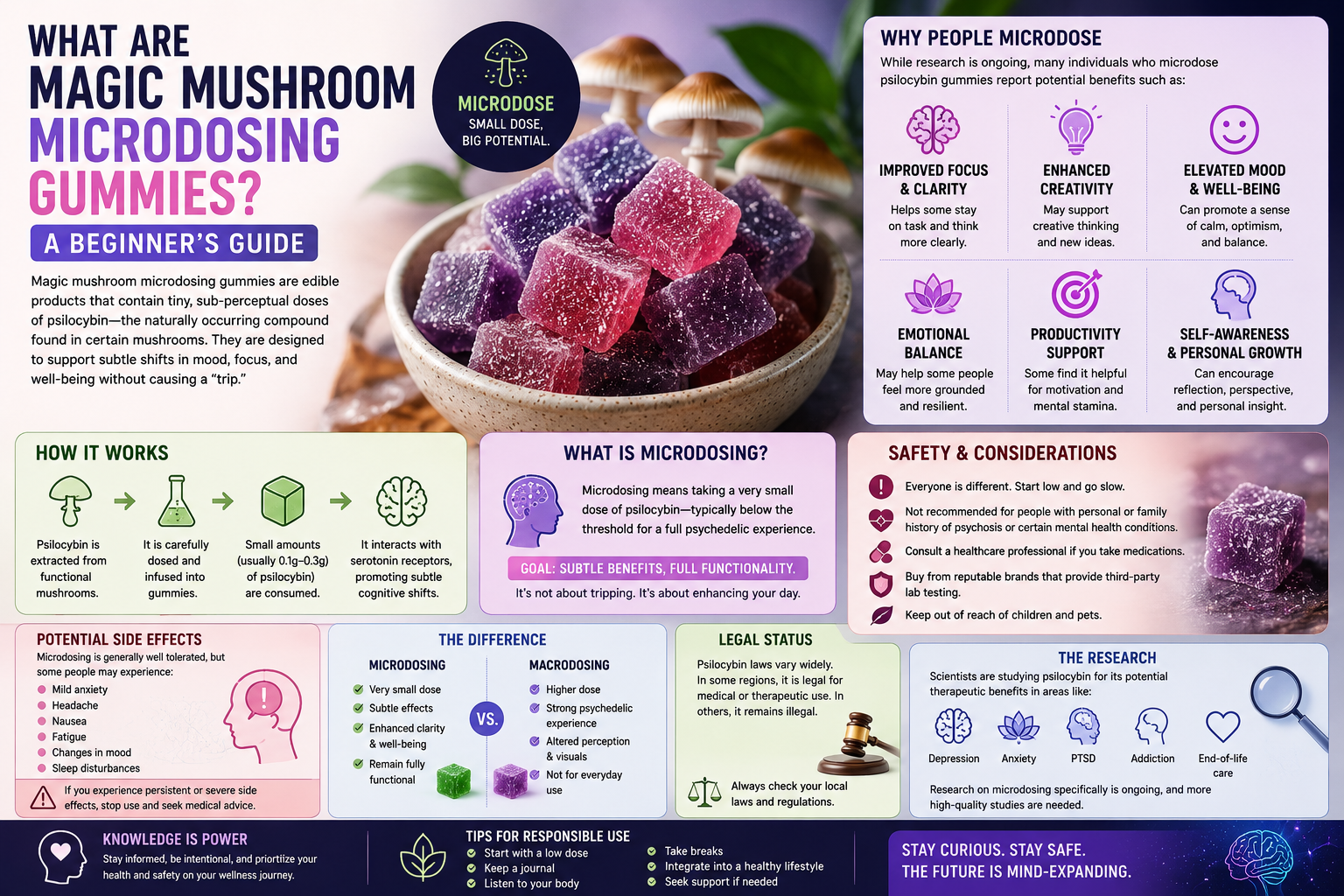
What Are Magic Mushroom Microdosing Gummies? A Beginner’s Guide
Magic mushroom microdosing gummies have become one of the most talked-about products in the growing conversation surrounding psychedelics, wellness, and mental health research. As public interest in psilocybin continues to increase, many people are encountering terms such as “microdosing,” “psilocybin gummies,” and “magic mushroom edibles” for the first time.
While these products are often discussed on social media, in wellness communities, and in news coverage of psychedelic research, many people still have questions about what they are, how they work, and what current science actually says about them.
This beginner’s guide explores the basics of magic mushroom microdosing gummies, including what they are, how they differ from traditional mushrooms, why some people are interested in them, potential risks, current research, and important legal considerations. The goal is to provide educational information that helps readers better understand this emerging topic.
Understanding Magic Mushrooms
Before discussing microdosing gummies specifically, it helps to understand what magic mushrooms are.
Magic mushrooms are a group of fungi that contain psychoactive compounds known as psilocybin and psilocin. These naturally occurring substances can affect perception, mood, thought patterns, and sensory experiences.
Psilocybin itself is often referred to as a “prodrug,” meaning it is converted by the body into psilocin after consumption. Psilocin then interacts with serotonin receptors in the brain, particularly receptors involved in mood, cognition, and perception.
For centuries, certain cultures have used psilocybin-containing mushrooms in spiritual, ceremonial, and traditional practices. In recent decades, scientists have also begun studying psilocybin for its potential role in mental health treatment under controlled clinical conditions.
Today, interest in psilocybin has expanded beyond academic research, leading to the development of various products, including capsules, chocolates, beverages, and gummies.
What Are Magic Mushroom Microdosing Gummies?
Magic mushroom microdosing gummies are edible products that contain psilocybin or compounds derived from psilocybin-containing mushrooms. They are typically formulated in gummy form, making them easy to consume and portion.
The term “microdosing” generally refers to taking very small amounts of a substance that are below the level traditionally associated with strong psychoactive effects.
Unlike larger doses that may produce significant alterations in perception or consciousness, microdosing is often discussed in relation to subtle effects that some users report experiencing in their daily lives.
Microdosing gummies have become popular because they offer a convenient and standardized format compared to raw mushrooms, which can vary significantly in potency and appearance.
However, it is important to recognize that products marketed as magic mushroom gummies can differ substantially in ingredients, quality, and composition.
Why Gummies Have Become Popular
The growing popularity of gummy products is not unique to psilocybin.
Many consumers prefer gummies because they are:
- Convenient
- Portable
- Easy to consume
- Familiar in format
- Simple to portion
- Often flavored to improve taste
Traditional dried mushrooms can have a strong earthy flavor that some individuals find unpleasant. Gummies provide an alternative delivery method that may be perceived as more approachable.
Manufacturers also market gummies as offering more consistent serving sizes than dried mushrooms, although consistency can vary depending on product quality and manufacturing standards.
What Is Microdosing?
Microdosing is one of the most discussed topics within the broader psychedelic conversation.
Generally speaking, microdosing refers to taking a very small amount of a substance with the goal of producing subtle effects rather than a full psychedelic experience.
Individuals who discuss microdosing often describe it as a way to explore potential changes in mood, creativity, focus, or well-being while remaining fully functional in everyday activities.
It is important to understand that scientific research on microdosing remains ongoing. While many anecdotal reports exist, researchers continue investigating whether perceived benefits are caused by the substance itself, placebo effects, lifestyle changes, or a combination of factors.
As a result, many questions remain unanswered.
How Does Psilocybin Affect the Brain?
Psilocybin primarily affects the brain’s serotonin system.
Serotonin is a neurotransmitter involved in mood regulation, cognition, memory, sleep, and emotional processing.
After psilocybin is converted into psilocin, it interacts with serotonin receptors throughout the brain.
Researchers believe these interactions may influence:
- Mood
- Perception
- Emotional processing
- Cognitive flexibility
- Sensory experiences
- Self-awareness
Brain imaging studies have shown that psilocybin can temporarily alter communication patterns between different regions of the brain.
Scientists are actively studying these changes to better understand how psychedelic substances affect consciousness and behavior.
Why Are Researchers Interested in Psilocybin?
Interest in psilocybin research has grown significantly over the past two decades.
Scientists are investigating whether psilocybin-assisted therapies may have potential applications in certain mental health conditions when administered in carefully controlled clinical settings.
Areas of ongoing research include:
- Depression
- Anxiety
- Post-traumatic stress disorder (PTSD)
- Substance use disorders
- End-of-life distress
- Obsessive-compulsive disorder
It is important to note that clinical research differs substantially from recreational use or self-experimentation.
Research studies typically involve:
- Medical screening
- Professional supervision
- Controlled environments
- Standardized protocols
- Psychological support
These safeguards are designed to maximize safety and collect reliable scientific data.
Common Reasons People Are Interested in Microdosing Gummies
People who discuss microdosing often cite various reasons for their interest.
Commonly reported motivations include:
Curiosity
Many individuals are interested in learning about emerging psychedelic trends and scientific developments.
Personal Growth
Some people explore topics related to self-awareness and personal development.
Creativity
Anecdotal reports frequently mention creativity as an area of interest.
Mood Support
Some individuals are curious about whether microdosing may influence emotional well-being.
Productivity
Others are interested in claims regarding focus and productivity.
While these motivations are commonly discussed, current scientific evidence remains mixed, and researchers continue evaluating many of these claims.
What Does Research Say About Microdosing?
Microdosing research is still relatively new compared to other areas of psychedelic science.
Some studies have reported modest improvements in certain psychological measures, while others have found little difference between microdosing and placebo conditions.
Researchers face several challenges when studying microdosing:
- Variability in products
- Differences in participant expectations
- Self-reporting biases
- Difficulty maintaining blinded study designs
Because expectations can influence outcomes, placebo-controlled research is particularly important.
At present, experts generally agree that more high-quality research is needed before firm conclusions can be drawn about many commonly claimed benefits.
Potential Risks and Side Effects
Although public discussions often focus on potential benefits, it is equally important to understand possible risks.
Potential side effects may include:
- Anxiety
- Restlessness
- Headaches
- Digestive discomfort
- Mood changes
- Sleep disturbances
- Increased emotional sensitivity
Individual responses vary significantly.
What feels manageable for one person may be uncomfortable for another.
The possibility of unexpected reactions underscores the importance of approaching discussions about psychedelics with realistic expectations.
Who Should Exercise Extra Caution?
Certain individuals may face increased risks from psilocybin-containing products.
People with a personal or family history of serious mental health conditions may be more vulnerable to adverse psychological reactions.
Additionally, those taking prescription medications should be aware that drug interactions are possible.
Individuals with underlying medical conditions should discuss concerns with qualified healthcare professionals.
Personal health history plays an important role in determining risk.
Product Quality and Safety Concerns
One of the biggest concerns surrounding mushroom gummies involves product quality.
Not all products marketed as mushroom gummies contain the ingredients listed on their labels.
In unregulated markets, products may vary in:
- Potency
- Purity
- Ingredient accuracy
- Manufacturing quality
Some products marketed as “magic mushroom gummies” may not contain psilocybin at all.
Others may contain entirely different substances.
This lack of consistency can create significant safety concerns.
For this reason, public health experts frequently emphasize the importance of product transparency, testing, and regulatory oversight.
The Difference Between Functional Mushroom Gummies and Psilocybin Gummies
Consumers sometimes confuse functional mushroom gummies with psilocybin gummies.
Functional mushroom products often contain non-psychoactive mushroom species such as:
- Lion’s Mane
- Reishi
- Cordyceps
- Chaga
- Turkey Tail
These mushrooms do not contain psilocybin and are generally marketed for wellness purposes.
Psilocybin gummies, on the other hand, contain psychoactive compounds that affect the brain differently.
Understanding this distinction helps consumers make informed decisions.
Legal Status of Psilocybin Gummies
The legal status of psilocybin products varies significantly around the world.
Some jurisdictions have decriminalized or reduced penalties for certain psychedelic substances.
Others have created limited pathways for therapeutic or research use.
However, psilocybin remains regulated or prohibited in many locations.
Because laws continue to evolve, individuals should consult current local regulations before purchasing, possessing, or using any psilocybin-containing products.
Legal status can change rapidly as new policies emerge.
Public Interest and the Future of Psychedelic Research
Interest in psychedelics has increased dramatically in recent years.
Several factors have contributed to this trend:
- Expanding scientific research
- Increased media coverage
- Mental health discussions
- Changing public attitudes
- Emerging policy debates
Researchers continue studying how psychedelics affect the brain and whether they may have future therapeutic applications.
At the same time, scientists emphasize the need for rigorous research, careful regulation, and evidence-based decision-making.
The future of psychedelic science remains an active and evolving field.
Common Misconceptions About Microdosing Gummies
There are several misconceptions surrounding microdosing products.
One misconception is that all reported benefits are scientifically proven.
In reality, many claims remain under investigation.
Another misconception is that natural substances are automatically safe.
Like any psychoactive substance, psilocybin can produce adverse effects depending on circumstances and individual factors.
Some people also assume all mushroom gummies contain the same ingredients.
Product composition can vary considerably, making consumer education especially important.
Why Education Matters
As interest in psychedelic products grows, access to accurate information becomes increasingly important.
Educational resources help individuals:
- Understand scientific findings
- Recognize limitations in current research
- Evaluate health claims critically
- Understand legal considerations
- Make informed decisions
Balanced information encourages realistic expectations while helping reduce misinformation.
Public understanding benefits when discussions focus on evidence rather than hype.
Conclusion
Magic mushroom microdosing gummies are edible products that contain psilocybin or compounds derived from psilocybin-containing mushrooms. They have gained attention due to growing interest in psychedelics, mental health research, and wellness trends.
While many people are curious about microdosing and its potential effects, scientific research remains ongoing. Researchers continue exploring how psilocybin affects the brain, whether microdosing produces measurable benefits, and what risks may be associated with its use.
Understanding the difference between anecdotal reports and scientific evidence is essential. Equally important is recognizing concerns related to product quality, safety, legality, and individual health factors. Read More.
As psychedelic research continues to evolve, education remains one of the most valuable tools for helping individuals navigate this rapidly changing field. By staying informed and approaching the topic with curiosity and critical thinking, readers can better understand both the promise and the uncertainties surrounding magic mushroom microdosing gummies. Click here for those researchers seeking magic mushroom microdosing gummies online.
Frequently Asked Questions (FAQs) About Magic Mushroom Microdosing Gummies
1. What are magic mushroom microdosing gummies?
Magic mushroom microdosing gummies are edible products that contain small amounts of psilocybin or compounds derived from psilocybin-containing mushrooms. They are designed to provide a convenient and measured format for individuals interested in learning about microdosing and psychedelic wellness trends.
2. What is psilocybin?
Psilocybin is a naturally occurring psychoactive compound found in certain species of mushrooms, often referred to as “magic mushrooms.” After consumption, the body converts psilocybin into psilocin, which interacts with serotonin receptors in the brain.
3. What does microdosing mean?
Microdosing generally refers to taking very small amounts of a substance that are below the level typically associated with strong psychoactive effects. The goal is often to explore subtle changes in mood, cognition, or well-being rather than experiencing a full psychedelic experience.
4. How are microdosing gummies different from traditional magic mushrooms?
Microdosing gummies are manufactured edible products that are typically formulated to provide a more standardized amount of ingredients. Traditional dried mushrooms can vary in potency, appearance, and composition, whereas gummies are often marketed as offering greater consistency and convenience.
5. Do microdosing gummies cause hallucinations?
Microdosing is generally discussed in the context of doses intended to be below the threshold for significant perceptual changes. However, individual responses vary, and factors such as product quality, potency, and personal sensitivity can influence experiences.
6. Why have magic mushroom gummies become popular?
Several factors have contributed to their popularity, including:
- Growing interest in psychedelic research
- Increased media coverage
- Convenience and portability
- Familiar gummy format
- Interest in wellness trends
- Curiosity about microdosing
7. How does psilocybin affect the brain?
Psilocybin interacts primarily with serotonin receptors in the brain. Researchers believe this interaction may influence mood, perception, emotional processing, and communication between different brain regions. Scientists continue studying these effects to better understand their significance.
8. What are some commonly reported reasons people explore microdosing?
People who discuss microdosing often mention interests such as:
- Creativity
- Focus
- Mood support
- Self-reflection
- Personal growth
- Curiosity about psychedelic experiences
It is important to note that many reported benefits remain under scientific investigation.
9. What does current research say about microdosing?
Research on microdosing is ongoing. Some studies suggest potential psychological benefits, while others find minimal differences between microdosing and placebo conditions. Experts generally agree that more rigorous research is needed before definitive conclusions can be made.
10. Are the benefits of microdosing scientifically proven?
Not entirely. While there is growing scientific interest in psilocybin, many claims associated with microdosing are based on personal reports rather than large-scale clinical evidence. Researchers continue to study the topic to better understand potential effects and limitations.
11. What are the potential side effects of psilocybin gummies?
Potential side effects may include:
- Anxiety
- Restlessness
- Headaches
- Nausea
- Digestive discomfort
- Sleep disturbances
- Mood fluctuations
- Increased emotional sensitivity
Individual reactions can vary significantly.
12. Are magic mushroom microdosing gummies safe?
Safety depends on multiple factors, including product quality, ingredients, individual health conditions, and personal sensitivity. Because research is ongoing and regulations vary, consumers should approach products with caution and seek reliable information.
13. Can psilocybin gummies affect mental health?
Psilocybin can influence mood, perception, and emotional processing. Individuals with certain mental health conditions or a family history of serious psychiatric disorders may face increased risks of adverse psychological reactions.
14. Who should be especially cautious with psilocybin products?
People who may need additional caution include:
- Individuals with serious mental health conditions
- Those with a family history of psychosis
- People taking prescription medications
- Individuals with certain medical conditions
- Those who are pregnant or breastfeeding
Consulting a qualified healthcare professional is advisable when considering any psychoactive substance.
15. What is the difference between functional mushroom gummies and psilocybin gummies?
Functional mushroom gummies typically contain non-psychoactive mushrooms such as Lion’s Mane, Reishi, Cordyceps, or Chaga. These mushrooms do not contain psilocybin. Psilocybin gummies contain psychoactive compounds that affect perception and brain function differently.
16. How do consumers know what’s inside a mushroom gummy product?
Product quality can vary considerably. Some manufacturers provide third-party testing and ingredient transparency, while others may not. Consumers should carefully review labels and understand that product accuracy may differ depending on regulatory standards.
17. Why is product quality an important concern?
Product quality is important because some products marketed as mushroom gummies may contain ingredients that differ from what is listed on the label. Variations in potency, purity, and manufacturing practices can affect safety and consistency.
18. Are all mushroom gummies psychedelic?
No. Many mushroom gummies sold as wellness supplements contain only functional mushrooms and have no psychoactive effects. Psilocybin-containing products represent a separate category and should not be confused with non-psychoactive mushroom supplements.
19. Is psilocybin legal?
The legal status of psilocybin varies widely depending on the country, state, or local jurisdiction. Some regions have decriminalized or permitted limited therapeutic use, while others continue to prohibit possession and sale. Laws continue to evolve.
20. Why is psilocybin receiving so much attention from researchers?
Researchers are investigating whether psilocybin may have therapeutic applications in carefully controlled clinical settings. Areas of study include depression, anxiety, PTSD, addiction, and end-of-life psychological distress.
21. How is clinical psilocybin research different from consumer products?
Clinical studies typically involve:
- Medical screening
- Professional supervision
- Controlled environments
- Psychological support
- Standardized dosing
Consumer products are generally not studied under the same controlled conditions.
22. Can psilocybin gummies show up on a drug test?
Standard workplace drug tests do not typically screen specifically for psilocybin. However, specialized testing may detect psilocybin or its metabolites. Detection depends on the type of test used and other individual factors.
23. How long do psilocybin gummies last?
The duration of effects depends on factors such as product composition, metabolism, individual physiology, and amount consumed. Experiences can vary considerably from person to person.
24. Are natural substances automatically safe?
No. A common misconception is that natural substances are inherently safe. Many natural compounds can produce powerful biological effects and may carry risks depending on dosage, health status, and individual sensitivity.
25. What misconceptions exist about microdosing gummies?
Common misconceptions include:
- All benefits are scientifically proven
- Natural products are risk-free
- All mushroom gummies contain psilocybin
- Every product contains the same ingredients
- Everyone experiences the same effects
Education and critical thinking are important when evaluating claims.
26. What role does serotonin play in psilocybin’s effects?
Serotonin is a neurotransmitter involved in mood, cognition, sleep, and emotional regulation. Psilocybin interacts with serotonin receptors, which researchers believe contributes to its effects on perception and mental processes.
27. Can microdosing gummies improve creativity and productivity?
Some individuals report perceived improvements in creativity or productivity, but scientific findings remain mixed. Researchers continue studying whether these reported effects are directly related to psilocybin or influenced by other factors such as expectations and placebo effects.
28. Why is education about psilocybin important?
As public interest in psychedelics grows, access to accurate information helps people understand:
- Current scientific findings
- Potential risks
- Legal considerations
- Product quality concerns
- Limitations of existing research
Education promotes informed decision-making and reduces misinformation.
29. What is the future of psilocybin research?
The future of psilocybin research appears active and expanding. Scientists continue studying how psilocybin affects the brain and whether it may have therapeutic applications in mental health care. Additional clinical trials and regulatory developments are expected in the coming years.
30. What is the most important thing to know about magic mushroom microdosing gummies?
The most important thing to understand is that magic mushroom microdosing gummies are part of a rapidly evolving area of psychedelic research and consumer interest. While many claims and discussions exist, scientific evidence is still developing. Staying informed about current research, product quality, safety considerations, and legal status is essential for understanding this emerging topic responsibly.