- Your cart is empty
- Continue Shopping
Hallucinogenic Bufo alvarius Toad Venom Effects: Understanding the Science, Risks, and Research
-
By admin
- Posted on
- 0 comments
- Guide
Hallucinogenic Bufo alvarius Toad Venom Effects:
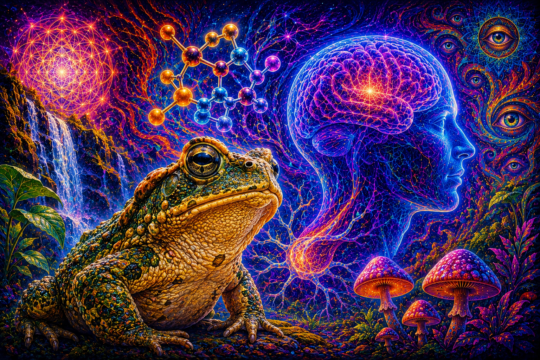
Interest in naturally occurring psychedelic compounds has expanded rapidly over the past decade, and few substances have generated as much attention as the secretions of the Sonoran Desert toad (Incilius alvarius, formerly Bufo alvarius). Media reports, documentaries, and scientific research have introduced many people to this unique amphibian and the psychoactive compound associated with its skin secretions.
At Psychedelic Ranger, our mission is to provide accurate, evidence-based information about psychedelic science, emerging research, public health, and environmental responsibility. This guide explains the biology of the Sonoran Desert toad, the effects associated with its secretions, current research, legal considerations, and the importance of conservation.
What Is the Bufo alvarius Toad?
The Sonoran Desert toad (Incilius alvarius), formerly known as Bufo alvarius, is one of North America’s largest native toads. It inhabits parts of:
- Arizona
- New Mexico
- Northern Mexico
The species spends much of the year underground and becomes active during seasonal rains.
Large parotoid glands behind the head produce defensive secretions that help protect the animal from predators.
Why Is the Toad Well Known?
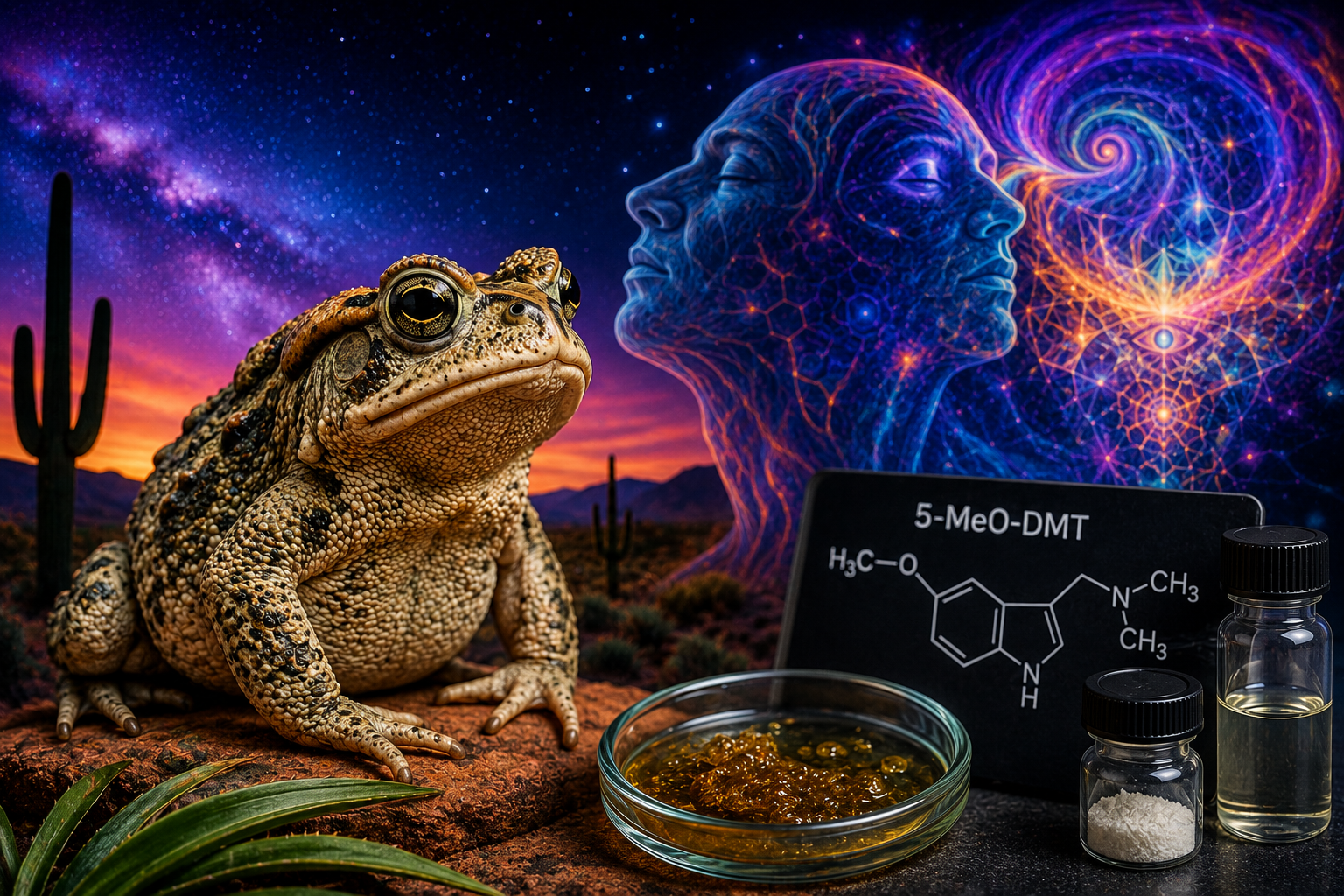
The toad has attracted scientific and public attention because its defensive secretions naturally contain 5-methoxy-N,N-dimethyltryptamine (5-MeO-DMT) along with other bioactive compounds.
Researchers study 5-MeO-DMT because of its distinctive pharmacological profile and its effects on serotonin receptors, particularly the 5-HT1A and 5-HT2 receptor systems.
Importantly, the presence of naturally occurring compounds does not imply that the secretion is safe for human use.
Reported Hallucinogenic Effects
In research and documented case reports involving purified 5-MeO-DMT, participants have described experiences that may include:
- Altered perception of time
- Changes in sensory awareness
- Intensified emotional experiences
- Feelings of interconnectedness
- Changes in self-perception or sense of identity
- Mystical-type experiences
- Visual and auditory alterations (less prominent than with some classic psychedelics)
Experiences vary considerably between individuals, and not everyone responds in the same way.
Duration of Effects
Scientific literature indicates that 5-MeO-DMT has a rapid onset and relatively short duration compared with many other classic psychedelics. Nevertheless, the psychological effects can be intense, and integration of the experience may continue long after the acute effects have resolved.
Potential Risks
Researchers emphasize that exposure to psychoactive substances can carry significant risks.
Potential adverse effects reported in clinical literature and case reports include:
- Anxiety or panic
- Confusion
- Elevated heart rate
- Increased blood pressure
- Nausea or vomiting
- Loss of coordination
- Temporary disorientation
- Psychological distress in susceptible individuals
Individuals with certain psychiatric or cardiovascular conditions may face increased risks.
Current Scientific Research
Interest in 5-MeO-DMT has grown because researchers are investigating its effects on:
- Consciousness
- Neuroplasticity
- Emotional processing
- Depression
- Anxiety
- Trauma-related disorders
- Psychological well-being
Research remains ongoing, and further studies are needed to better understand long-term safety, efficacy, and appropriate clinical applications.
Conservation and Ethical Considerations
Growing public interest has raised concerns among conservationists.
The Sonoran Desert toad faces pressures including:
- Habitat loss
- Climate change
- Human disturbance
- Illegal collection
- Stress associated with handling
Wildlife experts encourage respect for native ecosystems and discourage practices that may harm wild populations. Conservation efforts help protect both biodiversity and the species’ long-term survival.
Synthetic 5-MeO-DMT and Research
Modern scientific research often focuses on laboratory-produced 5-MeO-DMT rather than material derived from wild animals. Synthetic production can reduce pressure on wildlife while allowing researchers to study standardized compounds under controlled conditions.
Legal Status
The legal status of 5-MeO-DMT varies widely between countries and jurisdictions. Laws governing possession, manufacture, and research differ, and anyone seeking information should consult the regulations that apply where they live.
Frequently Asked Questions
Is Bufo alvarius venom the same as 5-MeO-DMT?
No. The toad’s defensive secretion contains multiple naturally occurring compounds. 5-MeO-DMT is one of them, but the secretion itself is a complex biological mixture.
Why is the Sonoran Desert toad important to science?
Researchers study compounds associated with the species to better understand neuroscience, consciousness, receptor pharmacology, and potential future therapeutic applications.
Is research still ongoing?
Yes. Universities and research institutions continue to investigate 5-MeO-DMT and related compounds, although many questions remain regarding long-term outcomes and clinical use.
Why is conservation important?
Protecting the Sonoran Desert toad helps preserve biodiversity and reduces ecological harm caused by habitat destruction and illegal collection.
What is the takeaway?
Understanding the science, respecting wildlife, and relying on evidence-based information are essential for informed discussions about psychedelic compounds and their potential medical or scientific significance.
Conclusion
The Sonoran Desert toad has become an important subject in discussions about psychedelic science because of the naturally occurring compounds associated with its defensive secretions. While ongoing research continues to explore the neurobiology and therapeutic potential of 5-MeO-DMT, public interest should be balanced with scientific evidence, legal awareness, patient safety, and wildlife conservation.
At Psychedelic Ranger, we are committed to promoting responsible education through accurate reporting, scientific literacy, and respect for both human health and the natural world.
hallucinogenic Bufo alvarius toad venom effects