- Your cart is empty
- Continue Shopping

MDMA Ordering in the United States: What You Need to Know
-
By admin
- Posted on
- 0 comments
- Guide
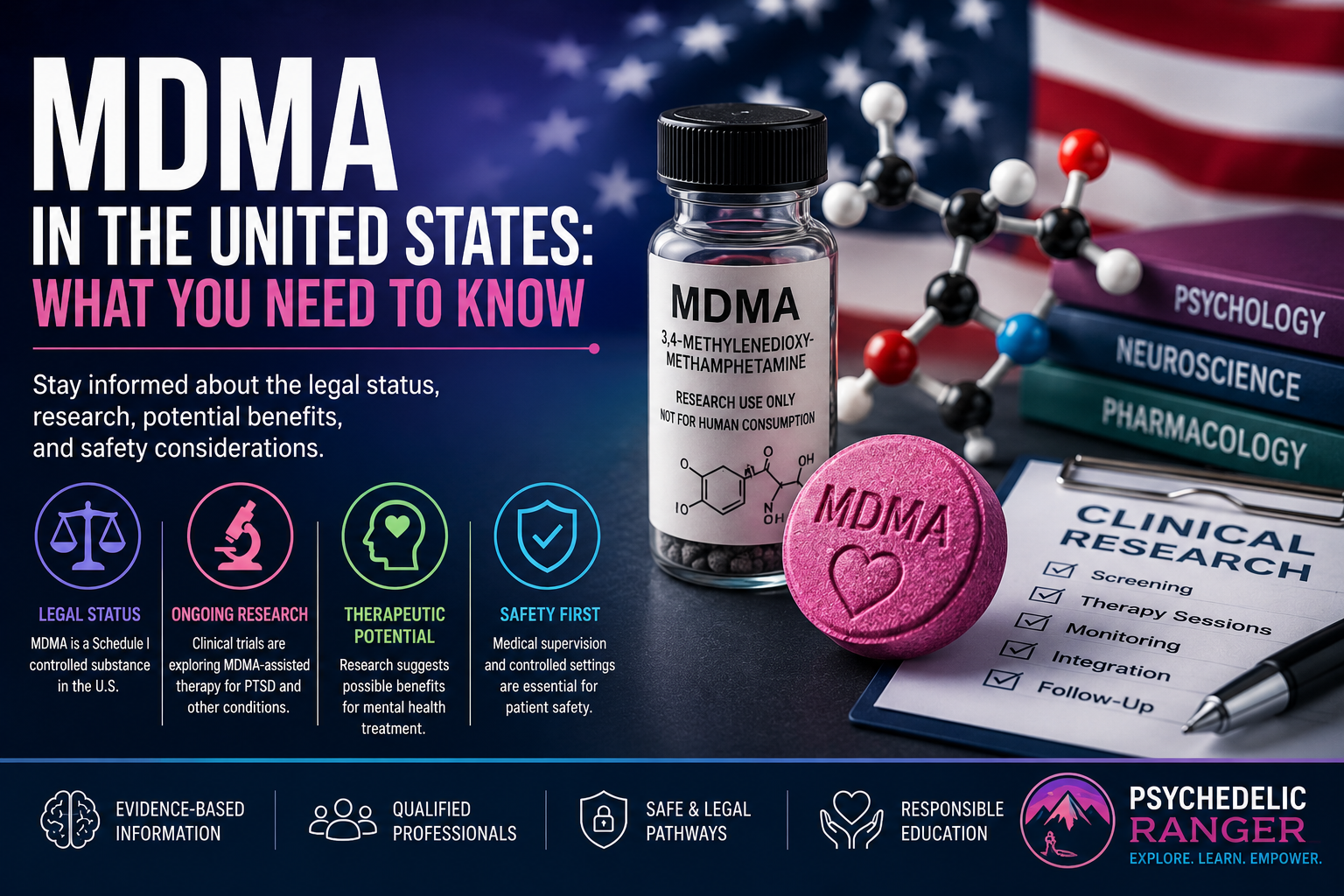
MDMA Ordering in the United States:
Interest in 3,4-methylenedioxymethamphetamine (MDMA) has grown significantly in recent years due to ongoing scientific research exploring its potential role in mental health treatment. At the same time, questions about its legal status and availability have become increasingly common.
At Psychedelic Ranger, our mission is to provide accurate, evidence-based educational information about psychedelic science, emerging therapies, and responsible decision-making. This guide explains what MDMA is, how it is being studied, its legal status in the United States, and important safety considerations.
What Is MDMA?
MDMA is a synthetic psychoactive compound that affects neurotransmitters including serotonin, dopamine, and norepinephrine. Researchers have studied its effects on mood, emotional processing, empathy, and fear responses.
Although MDMA has attracted attention for its potential therapeutic applications, it remains a controlled substance in the United States outside of approved research settings and other limited lawful uses.
Legal Status in the United States
In the United States, MDMA is classified as a Schedule I controlled substance under the Controlled Substances Act. This means unauthorized manufacture, possession, distribution, or sale is illegal under federal law.
Research involving MDMA may occur under regulatory oversight, ethics review, and applicable federal approvals. Anyone interested in MDMA-related treatment or research should consult licensed healthcare professionals and legitimate clinical research programs.
MDMA Research
Scientists continue to investigate MDMA-assisted therapy for several conditions, including:
- Post-traumatic stress disorder (PTSD)
- Anxiety associated with serious illness
- Trauma-related disorders
- Social anxiety in selected research settings
Clinical trials are conducted under carefully controlled conditions with medical screening, psychological support, and ongoing monitoring.
How MDMA-Assisted Therapy Differs from Non-Medical Use
Clinical research involving MDMA differs substantially from unsupervised use.
Research protocols generally include:
- Comprehensive medical evaluations
- Psychological assessments
- Professional therapists
- Controlled clinical environments
- Continuous patient monitoring
- Structured follow-up care
These safeguards are intended to maximize patient safety and scientific validity.
Potential Risks
Like many psychoactive substances, MDMA carries risks.
Potential adverse effects may include:
- Increased heart rate
- Elevated blood pressure
- Anxiety
- Nausea
- Sleep disturbances
- Jaw tension
- Dehydration
- Changes in body temperature
The likelihood and severity of adverse effects can vary based on individual health factors and context.
Why Product Quality Matters
A significant public health concern is that substances sold illegally as “MDMA” may contain entirely different compounds or harmful contaminants.
Because products obtained outside regulated medical or research settings cannot be assumed to be accurately labeled or tested, public health authorities consistently advise against relying on appearance or marketing claims to identify a substance.
Current Scientific Interest
Researchers are studying how MDMA may influence:
- Emotional processing
- Fear extinction
- Therapeutic alliance
- Memory reconsolidation
- Stress responses
- Quality of life in selected patient populations
While findings are encouraging in some areas, additional research is needed to better understand long-term safety and effectiveness.
Frequently Asked Questions
Is MDMA legal in the United States?
Outside authorized research and other limited lawful contexts, MDMA remains a Schedule I controlled substance under U.S. federal law.
Is MDMA approved as a prescription medication?
At present, MDMA is not generally approved as a prescription medication in the United States. Regulatory decisions may evolve as new scientific evidence becomes available.
Why is MDMA being researched?
Researchers are evaluating whether MDMA-assisted psychotherapy may benefit carefully selected patients with specific mental health conditions when delivered under strict clinical supervision.
Can I participate in MDMA research?
Eligible individuals may be able to participate in authorized clinical trials if they meet study criteria. Information about legitimate studies is available through recognized clinical research registries and participating medical institutions.
Why is professional supervision important?
Clinical supervision allows healthcare professionals to screen participants, monitor safety, manage adverse effects, and provide structured therapeutic support throughout the research process.
Responsible Education
Understanding the science behind MDMA involves balancing optimism about emerging research with recognition of its legal status and potential risks. Reliable information, evidence-based research, and qualified medical guidance remain the best foundation for informed decision-making.
At Psychedelic Ranger, we are committed to promoting accurate information about psychedelic science, ongoing clinical research, public health, and responsible education.