- Your cart is empty
- Continue Shopping

Ketamine Usage: Understanding Applications, Benefits, and Safety
-
By admin
- Posted on
- 0 comments
- Guide
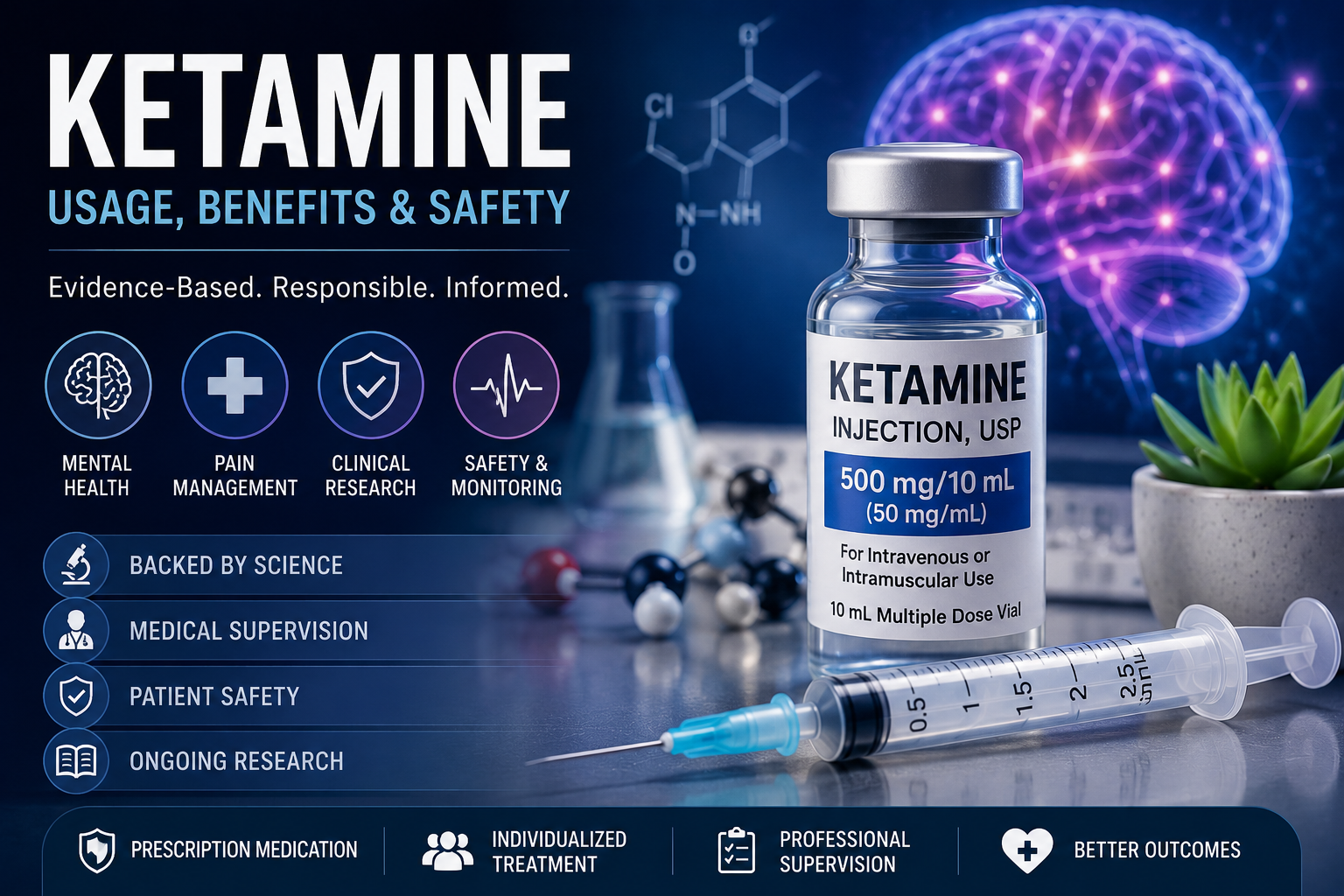
Ketamine Usage:
Ketamine has evolved from being a widely used anesthetic into one of the most researched medications in modern psychiatry and pain management. Over the past two decades, scientific interest in ketamine has expanded dramatically as researchers continue investigating its potential role in treating treatment-resistant mental health conditions and chronic pain syndromes under professional medical supervision.
At Psychedelic Ranger, we are committed to delivering accurate, evidence-based educational resources that help readers understand ketamine’s approved medical uses, emerging therapeutic applications, and important safety considerations. This guide provides a comprehensive overview of ketamine, how it is used in healthcare, current research, and why responsible medical supervision is essential.
What Is Ketamine?
Ketamine is a prescription medication first introduced in the 1960s as a dissociative anesthetic. Today, it remains an essential medicine in hospitals and emergency medicine due to its rapid onset, reliable anesthetic properties, and ability to preserve breathing and cardiovascular function in many clinical situations.
Beyond anesthesia, ketamine has become the subject of extensive research for its potential role in managing certain psychiatric disorders and chronic pain conditions when administered by qualified healthcare professionals.
Approved Medical Uses of Ketamine
Healthcare providers use ketamine for several established medical purposes, including:
General Anesthesia
Ketamine is commonly used:
- Emergency surgery
- Trauma care
- Pediatric procedures
- Veterinary medicine
- Short surgical interventions
- Sedation during certain medical procedures
Its unique pharmacological profile makes it particularly valuable in emergency settings where maintaining cardiovascular stability is important.
Pain Management
Specialists may use ketamine in carefully monitored clinical settings for selected patients experiencing complex or treatment-resistant pain conditions.
Research continues to evaluate its role in:
- Neuropathic pain
- Complex Regional Pain Syndrome (CRPS)
- Cancer-related pain
- Post-surgical pain management
- Chronic pain disorders
Treatment plans are individualized and supervised by experienced clinicians.
Ketamine in Mental Health Treatment
One of the fastest-growing areas of ketamine research involves mental health care.
Researchers continue studying ketamine for patients with:
- Treatment-resistant depression
- Major depressive disorder
- Bipolar depression (selected cases)
- Acute suicidal ideation in clinical settings
- Certain anxiety disorders
- Post-traumatic stress disorder (PTSD)
While evidence is promising for some conditions, ketamine is not appropriate for everyone and should only be considered after professional evaluation.
How Ketamine Works
Ketamine primarily acts on the brain’s glutamate system by modulating N-methyl-D-aspartate (NMDA) receptors. This mechanism differs significantly from traditional antidepressants, which generally target serotonin, norepinephrine, or dopamine.
Researchers believe ketamine may also influence:
- Synaptic plasticity
- Neural connectivity
- Brain-derived neurotrophic factor (BDNF)
- Neuroplasticity
- Stress-response pathways
These mechanisms remain active areas of scientific investigation.
Potential Benefits Being Studied
Clinical studies suggest ketamine may offer benefits for carefully selected patients under medical supervision, including:
- Rapid symptom improvement for some individuals with treatment-resistant depression
- Enhanced quality of life in specific clinical settings
- Improved participation in psychotherapy for selected patients
- Reduction of certain chronic pain symptoms
- New treatment possibilities for difficult-to-treat conditions
These outcomes vary between individuals, and ongoing research continues to refine best practices.
Safety Considerations
Like all prescription medications, ketamine carries risks that require professional oversight.
Potential side effects may include:
- Dizziness
- Temporary increases in blood pressure
- Nausea
- Blurred vision
- Drowsiness
- Dissociative experiences
- Temporary changes in perception
Healthcare providers monitor patients during treatment and adjust care plans as needed to minimize risks.
Who May Not Be an Ideal Candidate?
A healthcare professional will assess whether ketamine is appropriate based on:
- Medical history
- Cardiovascular health
- Current medications
- Mental health history
- Pregnancy status
- Substance use history
- Liver and kidney function
Certain conditions may require additional evaluation or alternative treatment approaches.
Importance of Professional Medical Supervision
Ketamine therapy should only be undertaken with qualified medical professionals who can:
- Perform comprehensive assessments
- Determine appropriate treatment plans
- Monitor vital signs
- Evaluate treatment response
- Address side effects promptly
- Coordinate ongoing care with other healthcare providers
Professional supervision helps maximize potential benefits while reducing avoidable risks.
Current Research and Future Directions
Interest in ketamine continues to expand worldwide.
Researchers are investigating:
- Long-term safety
- Maintenance treatment strategies
- Combination therapies
- Biomarkers predicting treatment response
- New ketamine-derived medications
- Improved delivery methods
- Personalized treatment protocols
As evidence grows, clinical guidelines continue to evolve to support safe, evidence-based use.
Legal Considerations
Ketamine is a regulated prescription medication in many countries. Access generally requires evaluation by a licensed healthcare provider and treatment in accordance with applicable laws and regulations.
Patients should obtain ketamine only through legitimate healthcare systems and licensed pharmacies where appropriate.
Frequently Asked Questions
Is ketamine only used as an anesthetic?
No. While anesthesia remains its primary approved use, ketamine is also used or studied in certain settings for chronic pain management and selected mental health conditions under medical supervision.
Is ketamine therapy safe?
When prescribed appropriately and administered by qualified healthcare professionals, ketamine has a well-established safety profile for approved medical uses. As with any medication, potential risks and benefits should be discussed with a healthcare provider.
Can ketamine treat depression?
Ketamine has shown promise for some individuals with treatment-resistant depression in clinical settings. However, treatment decisions should always be made by qualified medical professionals.
Is ketamine legal?
Ketamine is a prescription medication in many countries, and legal access depends on local laws and healthcare regulations.
Why is medical monitoring important?
Monitoring allows healthcare professionals to evaluate treatment response, manage side effects, and ensure patient safety throughout the course of care.
Conclusion
Ketamine represents one of the most significant developments in modern anesthesiology and an area of active research in psychiatry and pain management. Although its therapeutic potential continues to be explored, safe and effective use depends on careful patient selection, individualized treatment planning, and professional medical supervision.
At Psychedelic Ranger, we are dedicated to providing trustworthy, evidence-based educational content that helps readers better understand ketamine’s medical applications, ongoing research, and responsible use within the healthcare system.