- Your cart is empty
- Continue Shopping

What Are Brain Capsule Mushroom Supplements?
-
By admin
- Posted on
- 0 comments
- Guide
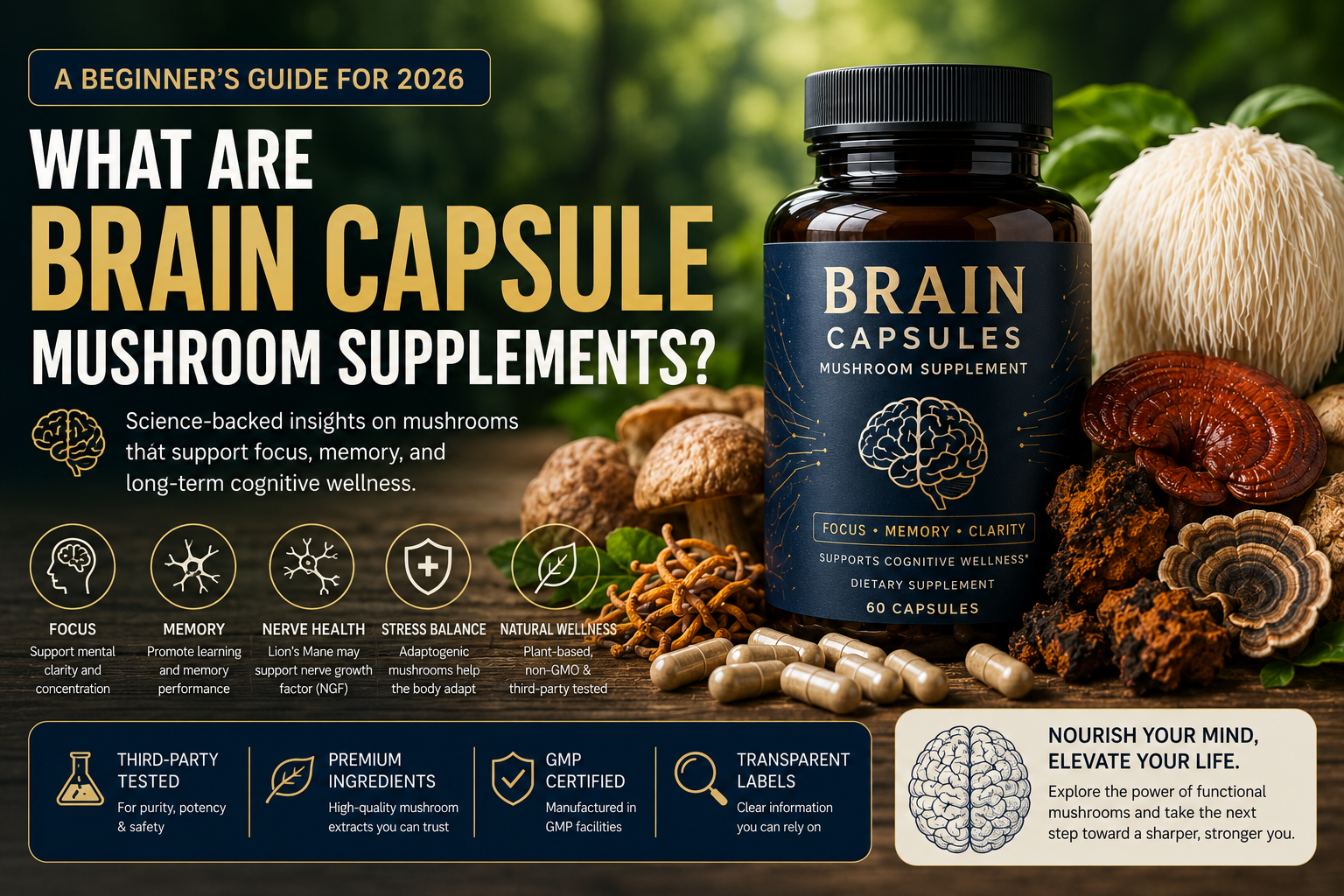
What Are Brain Capsule Mushroom Supplements? A Complete Beginner’s Guide for 2026
The global interest in brain health, cognitive wellness, and functional nutrition has expanded dramatically over the past decade. As consumers become increasingly interested in supporting memory, focus, productivity, and long-term cognitive performance, one category of supplements has experienced remarkable growth: Brain Capsule Mushroom Supplements.
In 2026, mushroom-based cognitive wellness products have become one of the most discussed areas within the functional supplement industry. Researchers, healthcare professionals, wellness enthusiasts, and consumers are all paying closer attention to the unique compounds found in certain mushroom species and their potential relationship to brain health.
However, many people who encounter these products for the first time often have questions. What exactly are Brain Capsule Mushroom Supplements? What ingredients do they contain? How do they differ from traditional supplements? What does scientific research say about cognitive-support mushrooms? And how can consumers identify high-quality products in an increasingly crowded marketplace?
This comprehensive beginner’s guide answers those questions while providing evidence-based educational information about mushroom-based brain supplements, current research, safety considerations, and future trends shaping the industry.
Understanding Functional Mushrooms
To understand Brain Capsule Mushroom Supplements, it is important to first understand functional mushrooms.
Functional mushrooms are mushroom species that contain naturally occurring compounds being studied for their biological activity and potential wellness applications. Unlike mushrooms consumed primarily as food, functional mushrooms are often used in extracts, powders, capsules, beverages, and specialized supplement formulations.
For centuries, various cultures have incorporated mushrooms into traditional health practices. Today, advances in scientific research have renewed interest in these organisms and the unique compounds they contain.
As a result, functional mushrooms have become one of the fastest-growing segments within the wellness industry.
What Are Brain Capsule Mushroom Supplements?
Brain Capsule Mushroom Supplements are capsule-based products formulated with mushroom ingredients commonly associated with cognitive wellness and brain health research.
These supplements are designed to deliver mushroom extracts or powders in a convenient, easy-to-use format.
Unlike beverages, powders, or gummies, capsules provide:
- Consistent serving sizes
- Portable convenience
- No preparation requirements
- Easy daily use
- Minimal taste concerns
- Long shelf stability
Many consumers prefer capsules because they fit easily into existing wellness routines.
Depending on the formulation, Brain Capsules may contain one mushroom species or a blend of multiple mushrooms selected for their complementary properties.
Why Brain-Focused Mushroom Supplements Are Becoming Popular
Several factors have contributed to the growing popularity of mushroom-based cognitive supplements.
Increased Interest in Brain Health
Modern lifestyles place significant demands on attention, productivity, memory, and mental performance.
Consumers increasingly seek products that align with broader cognitive wellness goals.
Growing Scientific Research
Research institutions continue studying mushroom compounds and their potential influence on neurological pathways.
Rising Awareness of Functional Mushrooms
Educational resources, scientific publications, and media coverage have increased public awareness.
Consumer Preference for Natural Wellness Solutions
Many individuals are interested in naturally derived ingredients supported by scientific investigation.
Convenience
Capsule supplements offer a practical solution for busy lifestyles.
Together, these factors have fueled substantial growth within the brain wellness supplement category.
The Most Common Mushrooms Found in Brain Capsules
Several mushroom species frequently appear in brain-focused supplement formulations.
Lion’s Mane
Lion’s Mane is widely regarded as the most prominent mushroom associated with cognitive wellness research.
This distinctive mushroom contains compounds known as hericenones and erinacines.
Researchers have shown particular interest in these compounds because of their relationship to nerve growth factor (NGF), a protein involved in the maintenance and function of nerve cells.
As a result, Lion’s Mane has become one of the most researched mushrooms in the cognitive wellness category.
Reishi
Although Reishi is often associated with stress management and overall wellness, it frequently appears in brain-support formulations.
Researchers continue investigating its bioactive compounds and their interactions with biological systems.
Cordyceps
Cordyceps is commonly included in formulations designed to support energy, endurance, and vitality.
Some consumers view cognitive performance and physical energy as closely connected.
Chaga
Chaga contains naturally occurring antioxidant compounds that continue to attract scientific attention.
Turkey Tail
Turkey Tail contains bioactive compounds being studied for their potential role in immune system function and overall health.
Understanding the Science Behind Lion’s Mane
Among all functional mushrooms, Lion’s Mane has received the greatest attention in discussions about brain health.
Researchers are particularly interested in how certain compounds found within Lion’s Mane may influence nerve growth factor activity.
Nerve growth factor plays an important role in:
- Nerve cell maintenance
- Cellular communication
- Neural health
- Cognitive function
Scientists continue investigating how Lion’s Mane-derived compounds interact with these biological pathways.
Although research remains ongoing, Lion’s Mane has become one of the most recognized mushrooms within cognitive wellness discussions.
What Is Neuroplasticity?
One of the most frequently discussed concepts in modern neuroscience is neuroplasticity.
Neuroplasticity refers to the brain’s ability to adapt, reorganize, and form new neural connections throughout life.
This process plays a role in:
- Learning
- Memory
- Skill development
- Recovery from injury
- Adaptation to new experiences
Researchers studying cognitive health frequently explore factors that may influence neuroplasticity, including nutrition, exercise, sleep, and naturally occurring compounds found in foods and supplements.
Key Compounds Found in Brain Mushrooms
Functional mushrooms contain numerous naturally occurring compounds.
Beta-Glucans
Beta-glucans are complex polysaccharides commonly found in mushroom cell walls.
These compounds have been extensively studied and are often considered important markers of mushroom quality.
Hericenones
Found primarily in Lion’s Mane fruiting bodies, hericenones continue to attract scientific interest.
Erinacines
Erinacines are compounds associated with Lion’s Mane mycelium and are frequently discussed in neuroscience research.
Polysaccharides
These bioactive compounds remain active areas of scientific investigation.
Ergothioneine
Ergothioneine is a naturally occurring antioxidant found in mushrooms and other foods.
Researchers continue studying its biological significance.
Mushroom Extracts vs. Whole Mushroom Powders
Consumers often encounter both mushroom extracts and mushroom powders.
Whole Mushroom Powders
These products are created by drying and grinding mushrooms.
They contain the complete mushroom material.
Mushroom Extracts
Extraction methods concentrate certain compounds from mushrooms.
Common methods include:
- Hot water extraction
- Dual extraction
- Proprietary extraction techniques
Many premium cognitive-support supplements utilize extracts because they provide higher concentrations of specific compounds.
Understanding the difference helps consumers evaluate products more effectively.
What Current Research Says About Brain Mushrooms
Scientific interest in cognitive-support mushrooms continues expanding.
Researchers are exploring areas such as:
Cognitive Function
Studies continue examining memory, learning, and mental performance.
Nervous System Health
Scientists investigate how mushroom compounds interact with neurological pathways.
Healthy Aging
Researchers are exploring how nutrition and bioactive compounds may support healthy aging processes.
Stress and Cognitive Performance
Some studies examine relationships between stress, cognition, and mushroom-derived compounds.
Neuroplasticity Research
Modern neuroscience continues investigating factors involved in brain adaptability.
Although promising findings exist, many questions remain under active investigation.
Understanding Supplement Quality
Not all mushroom supplements are manufactured to the same standards.
Consumers should evaluate several quality indicators.
Mushroom Species Identification
Reputable manufacturers clearly identify mushroom species.
Extraction Information
Extraction methods should be disclosed when applicable.
Beta-Glucan Content
Some products provide beta-glucan measurements.
Third-Party Testing
Independent testing helps verify:
- Ingredient identity
- Purity
- Potency
- Label accuracy
Manufacturing Standards
Quality-control procedures contribute to product reliability.
Transparency remains one of the strongest indicators of supplement quality.
Why Third-Party Testing Matters
As the mushroom supplement industry grows, independent testing has become increasingly important.
Third-party laboratories can evaluate:
- Contaminants
- Heavy metals
- Ingredient authenticity
- Product consistency
- Potency verification
Consumers often view independent testing as a sign of manufacturer accountability and transparency.
Safety Considerations
Most functional mushroom supplements are generally well tolerated when used according to product directions.
However, potential considerations may include:
- Digestive discomfort
- Allergic reactions
- Individual sensitivities
- Medication interactions
Responses can vary significantly among individuals.
Consumers should review product information carefully and consult healthcare professionals when appropriate.
Who Should Exercise Additional Caution?
Additional caution may be appropriate for:
- Pregnant individuals
- Breastfeeding individuals
- People with mushroom allergies
- Individuals taking prescription medications
- People with autoimmune conditions
- Individuals with complex medical histories
Professional guidance can help determine suitability.
Common Myths About Brain Mushroom Supplements
Several misconceptions frequently appear online.
Myth: All Brain Supplements Are the Same
Different products contain different ingredients, extraction methods, and quality standards.
Myth: More Ingredients Mean Better Results
Well-designed formulations often matter more than ingredient quantity.
Myth: Natural Products Cannot Cause Side Effects
Natural ingredients may still produce biological effects and interactions.
Myth: Every Marketing Claim Is Scientifically Proven
Many claims remain under investigation through ongoing research.
Critical evaluation remains important.
Brain Wellness Trends in 2026
Several developments continue shaping the future of cognitive wellness supplements.
Increased Research Activity
Scientific understanding of functional mushrooms continues expanding.
Improved Extraction Technologies
Manufacturers continue refining extraction processes.
Personalized Wellness Approaches
Consumers increasingly seek individualized supplement strategies.
Greater Transparency
Demand for testing and ingredient disclosure continues rising.
Advanced Product Formulations
Future supplements may incorporate increasingly sophisticated ingredient combinations.
These trends are likely to influence the market for years to come.
Why Consumer Education Matters
The growing popularity of cognitive wellness products highlights the importance of evidence-based education.
Reliable information helps consumers:
- Understand ingredients
- Evaluate claims
- Assess quality standards
- Interpret research findings
- Recognize safety considerations
- Make informed decisions
Education remains one of the most valuable tools available to supplement consumers.
What Beginners Should Know in 2026
For individuals exploring Brain Capsule Mushroom Supplements for the first time, several principles are worth remembering:
- Prioritize evidence-based information.
- Learn the differences between extracts and powders.
- Review third-party testing information.
- Understand ingredient transparency.
- Evaluate product quality carefully.
- Stay informed about emerging research.
These principles help support responsible supplement evaluation.
Conclusion
Brain Capsule Mushroom Supplements represent one of the fastest-growing categories within the functional wellness industry. Driven by increasing interest in cognitive health, scientific research, and natural wellness strategies, products featuring Lion’s Mane, Reishi, Cordyceps, Chaga, and other functional mushrooms continue gaining popularity among consumers worldwide.
While research continues to explore the relationships between mushroom compounds, neuroplasticity, cognitive function, and overall brain wellness, consumers should focus on product transparency, ingredient quality, third-party testing, and evidence-based information when evaluating supplements. Read more.
As the industry continues evolving throughout 2026 and beyond, education will remain the foundation of informed decision-making. By understanding the science, evaluating quality standards, and staying current with emerging research, consumers can navigate the growing world of Brain Capsule Mushroom Supplements with greater confidence and awareness. Click here for researchers or anyone looking for Brain Capsules (50mg-200mg) online.
Frequently Asked Questions (FAQs) About Brain Capsule Mushroom Supplements
1. What are Brain Capsule Mushroom Supplements?
Brain Capsule Mushroom Supplements are dietary supplements that contain functional mushroom extracts or powders commonly associated with cognitive wellness and brain health research. These products are typically formulated in capsule form for convenience and consistent serving sizes.
2. What are functional mushrooms?
Functional mushrooms are mushroom species that contain naturally occurring bioactive compounds being studied for their potential wellness applications. Popular examples include:
- Lion’s Mane
- Reishi
- Cordyceps
- Chaga
- Turkey Tail
- Maitake
These mushrooms have been used in traditional wellness practices for centuries and continue to attract scientific interest.
3. Why are mushroom capsules used for cognitive wellness?
Many consumers choose mushroom capsules because they offer:
- Easy daily use
- Portable convenience
- Consistent serving sizes
- No preparation required
- Minimal taste concerns
- Long shelf stability
Capsules fit easily into modern wellness routines.
4. What is Lion’s Mane mushroom?
Lion’s Mane is a functional mushroom widely recognized in cognitive wellness discussions. Researchers are particularly interested in compounds called hericenones and erinacines, which are being studied for their relationship to nerve growth factor (NGF) pathways.
5. Why is Lion’s Mane often included in brain supplements?
Lion’s Mane is frequently featured because ongoing research explores its relationship to:
- Cognitive function
- Memory
- Learning
- Nervous system health
- Neuroplasticity
It remains one of the most researched mushrooms in the cognitive wellness category.
6. What is nerve growth factor (NGF)?
Nerve growth factor is a protein involved in:
- Nerve cell maintenance
- Neural communication
- Nervous system function
- Cellular health
Researchers continue studying compounds that may interact with NGF-related pathways.
7. What is neuroplasticity?
Neuroplasticity refers to the brain’s ability to adapt, reorganize, and form new neural connections throughout life. It plays an important role in:
- Learning
- Memory
- Skill development
- Adaptation
- Recovery processes
Neuroplasticity remains a major area of neuroscience research.
8. What other mushrooms are commonly found in Brain Capsules?
Besides Lion’s Mane, many formulations may include:
- Reishi
- Cordyceps
- Chaga
- Turkey Tail
- Maitake
Each mushroom contains unique compounds that continue to be studied by researchers.
9. What is Reishi mushroom?
Reishi is one of the most recognized medicinal mushrooms worldwide. It contains naturally occurring compounds that have been studied for centuries and remains popular in modern wellness products.
10. What is Cordyceps mushroom?
Cordyceps is commonly associated with energy, endurance, and performance research. It is frequently included in wellness formulations that combine physical vitality with cognitive support.
11. What is Chaga mushroom?
Chaga contains naturally occurring antioxidant compounds and is commonly included in functional mushroom blends. Researchers continue investigating its biological properties.
12. What is Turkey Tail mushroom?
Turkey Tail is known for its distinctive appearance and bioactive compounds. It remains an important subject of research related to immune system function and overall wellness.
13. What are beta-glucans?
Beta-glucans are naturally occurring polysaccharides found in mushroom cell walls. They are among the most studied compounds in functional mushrooms and are often used as indicators of extract quality.
14. What are hericenones?
Hericenones are naturally occurring compounds found in Lion’s Mane mushroom fruiting bodies. They continue to attract scientific interest in neurological and cognitive research.
15. What are erinacines?
Erinacines are compounds associated with Lion’s Mane mycelium. Researchers frequently study them in relation to nervous system health and cognitive wellness.
16. What is ergothioneine?
Ergothioneine is a naturally occurring antioxidant found in mushrooms and certain foods. Scientists continue investigating its biological role and significance.
17. What is the difference between mushroom extracts and mushroom powders?
Mushroom powders are produced by drying and grinding mushrooms into a fine powder.
Mushroom extracts undergo specialized extraction processes designed to concentrate specific compounds found within mushrooms.
Many premium supplements use extracts because of their concentrated composition.
18. Why does extraction matter?
Extraction may help concentrate key mushroom compounds. Common extraction methods include:
- Hot water extraction
- Dual extraction
- Proprietary extraction techniques
Extraction methods can influence the composition of the final product.
19. What does current research focus on?
Researchers are studying mushroom compounds in areas including:
- Cognitive performance
- Memory
- Learning
- Healthy aging
- Neuroplasticity
- Nervous system function
Many questions remain under active scientific investigation.
20. Are Brain Capsule Mushroom Supplements medications?
No. These products are generally classified as dietary supplements rather than pharmaceutical drugs. They are regulated differently and are not intended to diagnose, treat, cure, or prevent diseases.
21. Are mushroom supplements generally safe?
Many functional mushroom supplements are generally well tolerated when used according to product directions. However, individual responses may vary.
22. What are potential side effects?
Potential side effects may include:
- Digestive discomfort
- Allergic reactions
- Stomach upset
- Individual sensitivities
Experiences vary from person to person.
23. Can mushroom supplements interact with medications?
Some mushroom-derived compounds may interact with certain medications. Individuals taking prescription medications should consult a healthcare professional before adding supplements to their routine.
24. Why is third-party testing important?
Third-party testing helps verify:
- Ingredient identity
- Purity
- Potency
- Label accuracy
- Contaminant screening
Independent testing is often viewed as a sign of transparency and quality.
25. What should consumers look for when choosing a mushroom supplement?
Important factors include:
- Mushroom species identification
- Extraction information
- Beta-glucan content
- Third-party testing
- Transparent labeling
- Quality manufacturing standards
26. Are all mushroom supplements the same?
No. Products can differ significantly in:
- Ingredients
- Extraction methods
- Potency
- Testing procedures
- Manufacturing standards
- Quality controls
Careful product evaluation is recommended.
27. What are some common myths about brain mushroom supplements?
Common misconceptions include:
- All mushroom supplements are identical
- Natural products cannot have side effects
- More ingredients always mean better products
- Every marketing claim is scientifically proven
- Higher prices always indicate superior quality
Consumers should evaluate claims critically.
28. What are the major trends in mushroom supplements in 2026?
Key trends include:
- Increased scientific research
- Improved extraction technologies
- Greater product transparency
- Personalized wellness approaches
- Advanced mushroom formulations
- Growing consumer education
These developments continue shaping the industry.
29. What should beginners learn first?
Beginners should focus on:
- Understanding mushroom species
- Learning about extracts and powders
- Reading supplement labels
- Reviewing testing information
- Evaluating evidence-based claims
Education provides a strong foundation for informed decisions.
30. What is the most important thing to know about Brain Capsule Mushroom Supplements?
The most important thing to understand is that Brain Capsule Mushroom Supplements are part of a rapidly growing field of functional mushroom research and cognitive wellness. Consumers should prioritize evidence-based information, ingredient transparency, quality manufacturing, independent testing, and ongoing education when evaluating any mushroom supplement product.