- Your cart is empty
- Continue Shopping

Few designer drugs have generated as much public alarm as alpha-PVP. Nicknamed “flakka” and “gravel” on the street, this synthetic stimulant made national headlines in the mid-2010s after a wave of bizarre, violent, and sometimes fatal incidents linked to its use. But despite the media attention, many people still don’t know exactly what alpha-PVP is, how it affects the body and brain, or why it’s considered one of the more dangerous substances in the synthetic drug landscape.
This guide breaks down the chemistry, history, effects, risks, legal status, and treatment options associated with alpha-PVP — giving you an authoritative, fact-based understanding of the substance without sensationalism.
Alpha-PVP stands for alpha-pyrrolidinopentiophenone (also written as alpha-pyrrolidinovalerophenone). It belongs to a class of chemicals called synthetic cathinones, which are lab-made compounds structurally related to cathinone, a naturally occurring stimulant found in the khat plant (Catha edulis), traditionally chewed in parts of East Africa and the Arabian Peninsula.
Synthetic cathinones are sometimes grouped under the umbrella term “bath salts,” a name that stuck after early versions of these drugs were sold disguised as bath salts, plant food, or other household products to skirt drug laws. Alpha-PVP is one of the most potent and notorious members of this drug family.
Chemically, alpha-PVP is a novel stimulant substance of the cathinone and pyrrolidinophenone classes, chemically related to prolintane, and belongs to a group called the substituted cathinones that also includes compounds like MDPV. Pharmacologically, it acts as a norepinephrine-dopamine reuptake inhibitor, meaning it blocks the reabsorption of two key neurotransmitters associated with alertness, motivation, and reward — a mechanism similar in category to stimulants like cocaine and amphetamines, though structurally distinct from both.
Interestingly, alpha-PVP was originally patented in the 1960s by the pharmaceutical company Boehringer Ingelheim, although it was never brought to market. The compound sat largely forgotten in scientific literature for decades until reports of recreational use began appearing in the early 2010s.
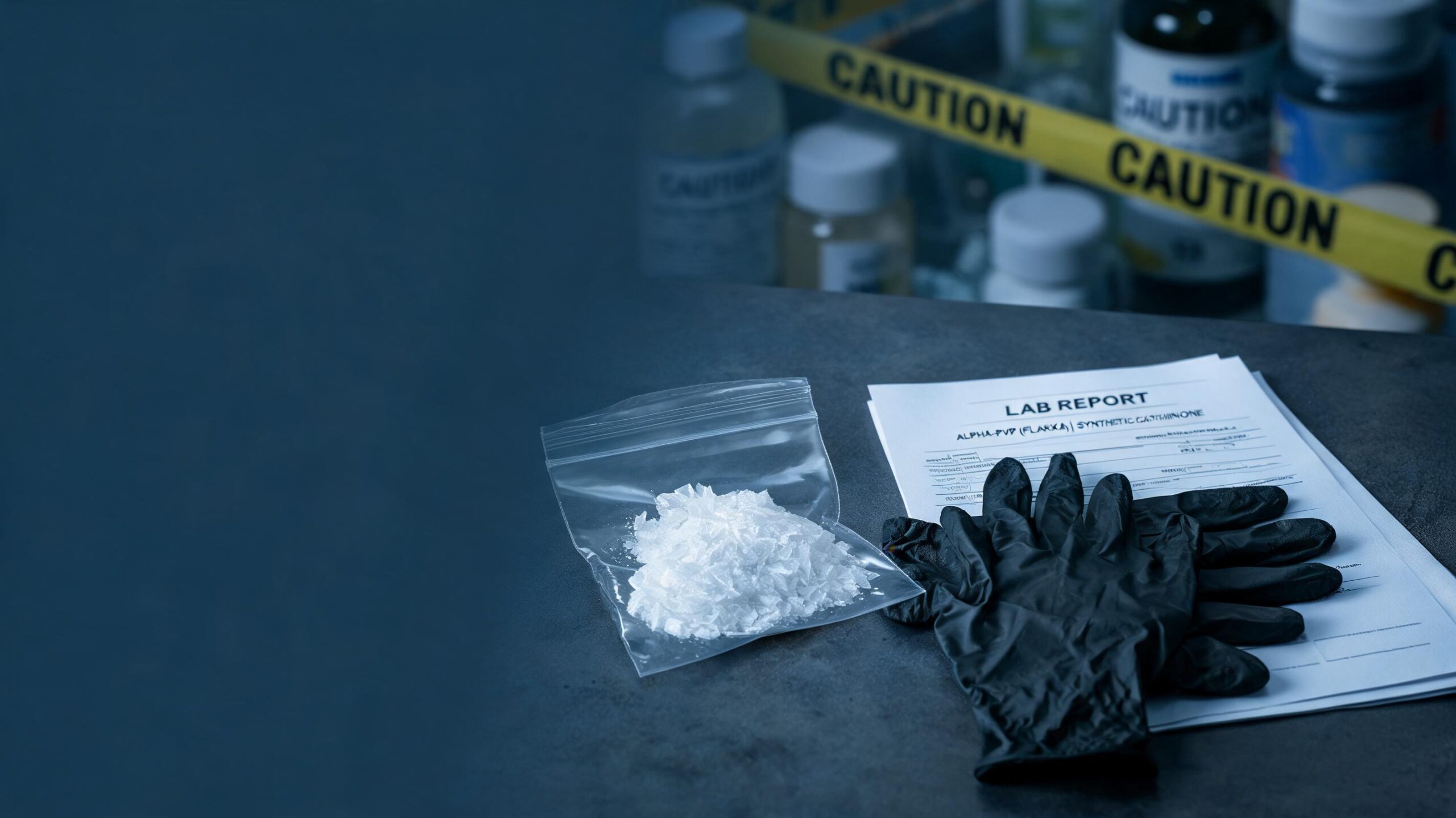
Alpha-PVP became infamous under its street name, flakka — believed to be a play on Spanish slang. It’s also sometimes called “gravel” because of its appearance. The drug resembles small stones, hence the nickname gravel, and typically appears as a dusty pink or white crystalline substance.
The drug’s rise to notoriety is closely tied to South Florida. Flakka is believed to have originated in South Florida in the early 2010s, where it was quickly labeled a Schedule I controlled substance after a string of alarming public incidents. News reports throughout 2014 and 2015 described people under the influence of flakka exhibiting extreme agitation, superhuman strength, and irrational, sometimes violent behavior — earning it the informal (and unscientific) nickname “the zombie drug” in tabloid coverage.
Alpha-PVP is a versatile compound in terms of how it can be administered, which is part of what makes it so dangerous. It has been used by a variety of different routes of administration, including oral ingestion, insufflation (snorting), injection, vaporization, sublingual, and rectal use. It is also possible for flakka to be loaded into an e-cigarette and vaped, which has made detection and regulation more difficult, particularly among younger users.
This guide does not provide instructions on dosing or administration methods, as there is no safe way to use alpha-PVP — its effects are unpredictable even among people who consider themselves experienced drug users, and the margin between a recreational and a life-threatening dose is dangerously narrow.
Like other stimulant drugs, alpha-PVP produces a rush of energy and euphoria. However, its effects are notably intense, forced, and often accompanied by severe psychological disturbances.
According to harm-reduction and toxicology literature, common effects associated with alpha-PVP use include:
These effects do not necessarily occur in a predictable or reliable manner, though higher amounts are more likely to trigger the full spectrum of adverse effects, including addiction, severe injury, or death.
Alpha-PVP’s danger comes from a combination of factors: its potency, its unpredictable manufacturing, and the severity of its physical side effects.
Alpha-PVP use has been associated with hyperthermia (dangerously elevated body temperature), liver and kidney failure, hypertension, narrowing of the blood vessels, irregular heartbeat, stroke, heart attack, suicidal ideation, coma, and death. The combination of extreme physical exertion (from forced stimulation) and cardiovascular strain is one of the primary mechanisms behind flakka-related fatalities.
Alpha-PVP carries a high potential for overdose, especially when vaporized, since the exact amount being consumed is difficult to quantify with this method. The onset of an overdose is often rapid and can involve heart problems, aggressive behavior, and psychosis.
Because alpha-PVP is produced in clandestine or overseas labs rather than under any pharmaceutical quality control, batch purity and potency vary enormously. Products sold on the street as “flakka” have frequently been found to contain other synthetic cathinones, unknown fillers, or dangerously high concentrations of the active compound — meaning users often have no real way of knowing what they’re taking or how strong it is.
The effects of flakka and other bath salts are remarkably similar — both can induce euphoria, heightened sex drive, increased sociability, and hallucinations, but in excessive amounts can lead to high blood pressure, elevated heart rate, paranoia, aggression, panic attacks, and psychosis. This overlap is expected, since both substances belong to the broader synthetic cathinone family and act on similar neurochemical pathways.
Alpha-PVP has a high potential for compulsive use. Its mechanism of action — flooding the brain’s reward pathways with dopamine and norepinephrine — creates an intense but short-lived high, which can drive a cycle of repeated use as the effects wear off. Over time, this pattern can lead to tolerance (needing more of the drug to achieve the same effect), psychological dependence, and significant disruption to a person’s health, relationships, and daily functioning.
People who use alpha-PVP repeatedly may also experience noticeable personality and behavioral changes. Those who spend time around someone using or abusing flakka may notice increased disinhibition, impulsivity, and agitation over time.
Because withdrawal and crash periods from stimulant drugs can involve depression, fatigue, and intense cravings, addiction to alpha-PVP is often difficult to overcome without professional support.
Because alpha-PVP toxicity can escalate quickly and involves both neurological and cardiac symptoms, emergency medical treatment typically focuses on stabilizing the person rather than simply waiting out the drug’s effects. Medical teams often use benzodiazepines to counteract agitation and aberrant behavior caused by flakka toxicity, while cardiac effects may be addressed with careful intravenous medication to normalize heart rate and blood pressure, along with supportive monitoring over the following weeks to ensure a full recovery.
If you or someone nearby is experiencing symptoms such as extreme agitation, chest pain, dangerously high body temperature, seizures, or loss of consciousness after suspected alpha-PVP use, this is a medical emergency. Call 911 (or your local emergency number) immediately. Do not attempt to manage severe stimulant toxicity at home.
Alpha-PVP’s rapid spread in the early 2010s prompted swift regulatory action around the world.
United States: On January 28, 2014, the DEA listed alpha-PVP, along with nine other synthetic cathinones, as a Schedule I controlled substance under a temporary ban, which took effect on February 27, 2014. Substances in Schedule I are defined by the DEA as having no currently accepted medical use, a lack of accepted safety even under medical supervision, and a high potential for abuse — the same category that includes heroin and LSD. Alpha-PVP has since been permanently placed in Schedule I.
European Union: Alpha-PVP was required to be banned by all EU member states by July 3, 2017, under a Council Implementing Decision.
Other countries: Alpha-PVP became a controlled substance in China as of October 2015, and it has also been explicitly banned in jurisdictions such as New South Wales, Australia, following fatalities linked to its use.
Possessing, manufacturing, distributing, or selling alpha-PVP is illegal in most countries worldwide, and penalties can be severe given its Schedule I (or equivalent) classification.
Even though alpha-PVP was scheduled over a decade ago, synthetic cathinones as a category remain a persistent global issue. Because clandestine chemists can tweak molecular structures to create new, technically “unscheduled” analogs, regulatory agencies have had to continually expand their control lists. The DEA’s scheduling actions database shows a steady stream of newly controlled pyrrolidinophenone and cathinone analogs in the years since alpha-PVP was first banned — evidence of the ongoing cat-and-mouse dynamic between drug regulators and underground chemists.
Additionally, research on synthetic cathinones has continued well past the initial wave of media attention. Studies examining alpha-PVP’s effects on the brain — including its impact on spatial learning, memory, and mitochondrial function in animal models — continue to be published, reinforcing concerns about the long-term neurological consequences of use.
For families and friends concerned about a loved one, warning signs of alpha-PVP use may include:
If you notice several of these signs together, especially alongside a rapid change in someone’s personality or judgment, it’s worth having an honest, non-judgmental conversation and encouraging them to speak with a medical professional or addiction specialist.
To understand why alpha-PVP behaves so differently from many other stimulants, it helps to look at its chemical structure and how it interacts with the brain.
Substituted cathinones like alpha-PVP are derivatives of the naturally occurring compound cathinone, found in the khat plant. Cathinone itself is built on a phenethylamine core, with an alkyl group attached at the alpha carbon and a ketone group at the beta carbon. In alpha-PVP’s case, the structure consists of a cathinone core with a propyl group substituted at the alpha carbon and a pyrrolidine ring attached at the amino group — a structural modification that dramatically increases the compound’s potency compared to cathinone itself.
In its purified form, the hydrochloride salt of alpha-PVP appears as a white or off-white, odorless crystalline powder with a melting point around 161°C, and it is soluble in a range of solvents including ethanol and DMSO. This chemical stability and solubility profile is part of why the compound has been relatively easy to manufacture, transport, and adulterate into other products.
Functionally, alpha-PVP acts as a potent and selective norepinephrine-dopamine reuptake inhibitor with a potency similar to MDPV, another well-known synthetic cathinone. Unlike some stimulants that force the release of neurotransmitters directly, alpha-PVP does not act as a transporter substrate — meaning it blocks the reuptake pumps rather than triggering an artificial flood of chemical release. In practical terms, this contributes to the drug’s especially long-lasting and, at times, unpredictable psychological effects, since the neurotransmitters it affects remain active in the synapse for extended periods.
Onset and duration also help explain why alpha-PVP has proven so difficult for users to dose safely. Effects have been reported to begin within about 10 minutes, peak between 10 and 40 minutes later, and last roughly 2 to 3 hours — though real-world reports vary widely, with some psychological effects, including paranoia or disturbed sleep, persisting for much longer.
Understanding the drug’s history helps put its current legal and cultural status into context:
It’s natural to compare alpha-PVP to more familiar stimulants like cocaine, methamphetamine, or MDMA, but there are important distinctions worth understanding.
Alpha-PVP vs. Cocaine: The drug action of alpha-PVP is similar to that of cocaine in that both are reuptake inhibitors that increase dopamine activity in the brain. However, alpha-PVP is generally considered more potent milligram-for-milligram, and its psychological side effects — particularly paranoia and psychosis — tend to be more severe and longer-lasting than a typical cocaine experience.
Alpha-PVP vs. Methamphetamine: Both drugs can produce intense, prolonged stimulation and a similar profile of aggression, paranoia, and compulsive repetitive behavior. Alpha-PVP’s onset is generally faster, but its unregulated production means potency is far less consistent than illicitly manufactured methamphetamine, which — while also dangerous — tends to have a more “established” street chemistry.
Alpha-PVP vs. MDPV (Bath Salts): These two compounds are close chemical cousins within the pyrrolidinophenone family and produce very similar effects. Many of the “bath salts” incidents reported in the media from 2011–2013 actually involved MDPV, while flakka-related incidents in 2014–2015 were more specifically tied to alpha-PVP. In practice, the two are often indistinguishable to users, since both are synthetic cathinones with comparable stimulant and psychoactive profiles.
Is alpha-PVP the same thing as flakka?
Yes. Flakka is simply the street name most commonly used for alpha-PVP, particularly in the United States. It’s also sometimes referred to as “gravel” due to its crystalline appearance.
Is alpha-PVP legal anywhere?
No developed country currently permits the recreational sale or possession of alpha-PVP. It is a Schedule I substance in the United States, banned throughout the European Union, and controlled in China and numerous other jurisdictions.
Can alpha-PVP show up on a drug test?
Specialized toxicology screens can detect alpha-PVP and its metabolites in urine and oral fluid, though it typically won’t appear on a standard five-panel drug test designed to catch more common substances like THC, opioids, or cocaine. Detection requires a test specifically designed to screen for synthetic cathinones.
Why is alpha-PVP linked to such extreme behavior?
The combination of intense stimulant effects, a tendency to induce paranoia and psychosis, and inconsistent, unregulated dosing appears to be responsible for the extreme agitation and erratic behavior associated with heavy alpha-PVP use. Elevated body temperature and cardiovascular stress can also contribute to disorientation and combativeness in overdose situations.
Is there a safe way to use alpha-PVP?
No. Given its unpredictable potency, unknown purity when purchased illicitly, and potential for triggering severe psychiatric and cardiovascular events even in people with no prior history of drug problems, there is no dose or method of use considered safe.
Recovering from stimulant addiction, including alpha-PVP use, typically involves a combination of medical support, behavioral therapy, and long-term relapse-prevention planning. Because stimulant withdrawal can bring on depression, intense cravings, and psychological distress, many people benefit from a structured treatment program rather than trying to stop on their own.
If you or someone you care about is struggling with alpha-PVP or another synthetic drug, reaching out to a healthcare provider, addiction counselor, or a substance-use helpline is a strong first step. In the U.S., the Substance Abuse and Mental Health Services Administration (SAMHSA) operates a free, confidential National Helpline (1-800-662-4357) that can connect you with local treatment resources.
Alpha-PVP, widely known as flakka, is a potent synthetic cathinone that gained notoriety for its unpredictable and often severe effects on both the body and mind. Developed decades ago but only weaponized as a recreational drug in the 2010s, it illustrates a broader pattern in the world of designer drugs: obscure chemical compounds resurrected and mass-produced for recreational use, with little regard for the serious health consequences that follow.
This article is provided for informational and educational purposes only and does not constitute medical advice. If you suspect someone is experiencing a drug-related medical emergency, contact emergency services immediately. If you or someone you know is struggling with substance use, please consult a licensed healthcare provider or contact a substance use helpline such as SAMHSA’s National Helpline at 1-800-662-4357.